 Paige Ackerson-Kiely is the author of three poetry collections, most recently Dolefully, a Rampart Stands (Penguin 2019).
She’s the director of the MFA in Writing Program at Sarah Lawrence College, and lives in New York City.
Author Website for Brainard and Delia Carey
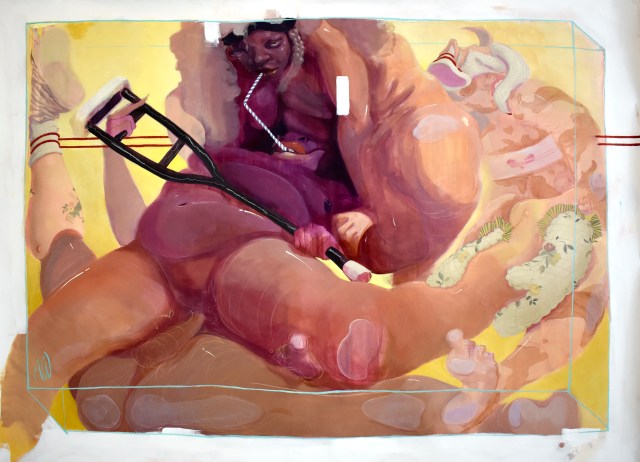
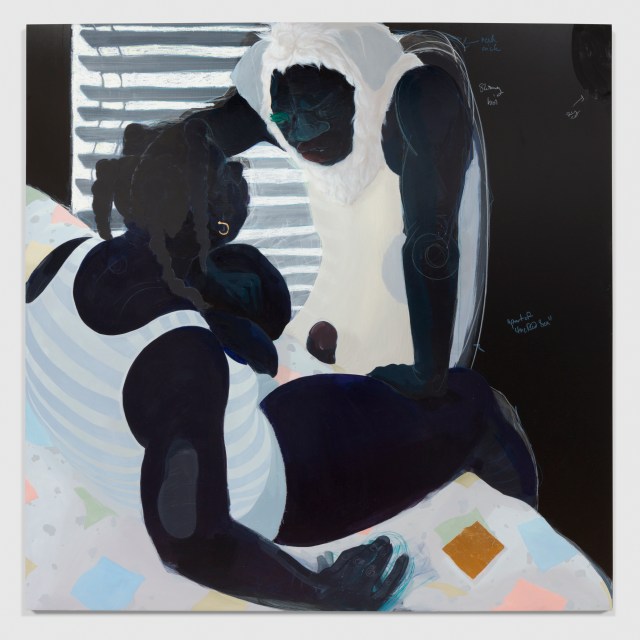
Paige Ackerson-Kiely is the author of three poetry collections, most recently Dolefully, a Rampart Stands (Penguin 2019). Autumn Wallace (b. 1996, Philadelphia, PA) is a visual artist who works across media to create paintings and sculptures that examine human sexuality, gender, and the black femme experience.
Influenced by early 90’s cartoons, Byzantine aesthetics, Baroque Style, and what Wallace describes as “low-quality adult materials”, Wallace’s work generates a sense of fluidity whereby figures defy spatial, social, physical, emotional, and psychological boundaries. Wallace is a graduate of the Tyler School of Art at Temple University.
Recent solo exhibitions include How to Hug Yourself: 10 Steps (with Pictures), Gaa Gallery, #THECONTAINTERSTORE, Fine Arts Work Center, Provincetown, MA; #MAJORSEXUALCHEESEFETISH, Portside Art Parlor, Philadelphia, PA; How Could I Say No To You?, HOUSE Gallery, Philadelphia, PA; and #SingleWithPets, Stella Elkins Gallery, Philadelphia, PA. Wallace is the recipient of numerous fellowships including residencies at the Fine Arts Work Center, Provincetown, MA; Massachusetts Museum of Contemporary Art (MASS MoCA), North Adams, MA; the Vermont Studio Center, Johnson, VT; and Yaddo Saratoga Springs, NY.
The books mentioned in the interview are Aesop’s Fables the Unabridged version, and Nature Poem by Tommy Pico.
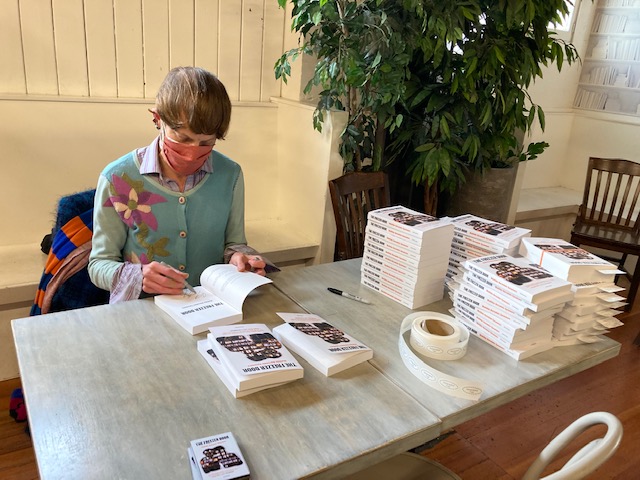
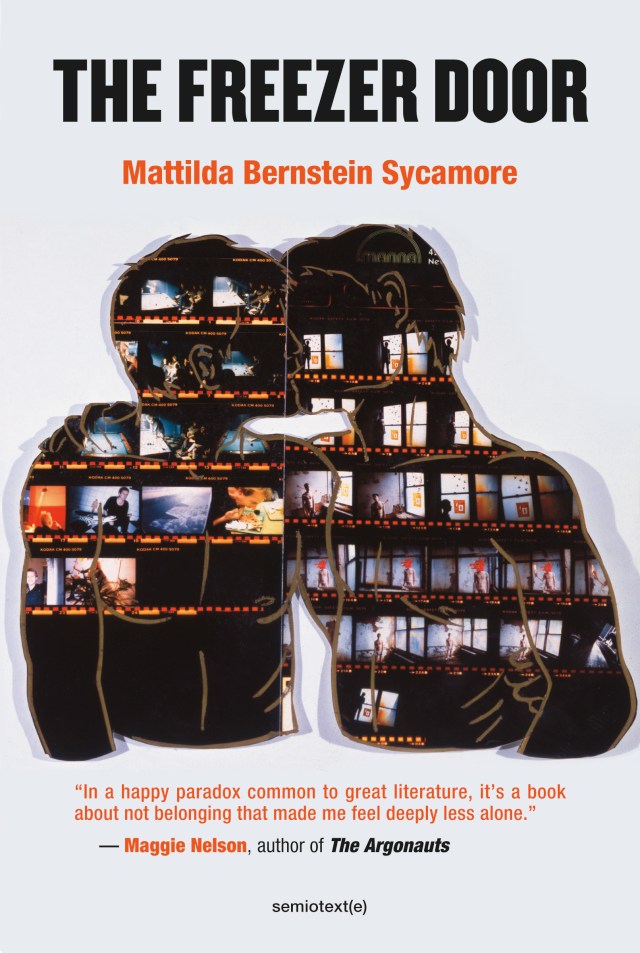
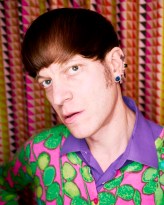 MATTILDA BERNSTEIN SYCAMORE is most recently the author of The Freezer Door, a New York Times Editors’ Choice, one of Oprah Magazine’s Best LGBTQ Books of 2020, and a finalist for the PEN/Jean Stein Book Award.
Her previous nonfiction title, The End of San Francisco, won a Lambda Literary Award, and her novel Sketchtasy was one of NPR’s Best Books of 2018. Sycamore is the author of two nonfiction titles and three novels, as well as the editor of five nonfiction anthologies.
Her sixth anthology, Between Certain Death and a Possible Future: Queer Writing on Growing up with the AIDS Crisis, will be out in October.
 Shingo Francis is an artist and painter who employ a minimal and abstract approach to his work to explore color, time and expanse. He has a keen appreciation for how these elements shape our perceptions.
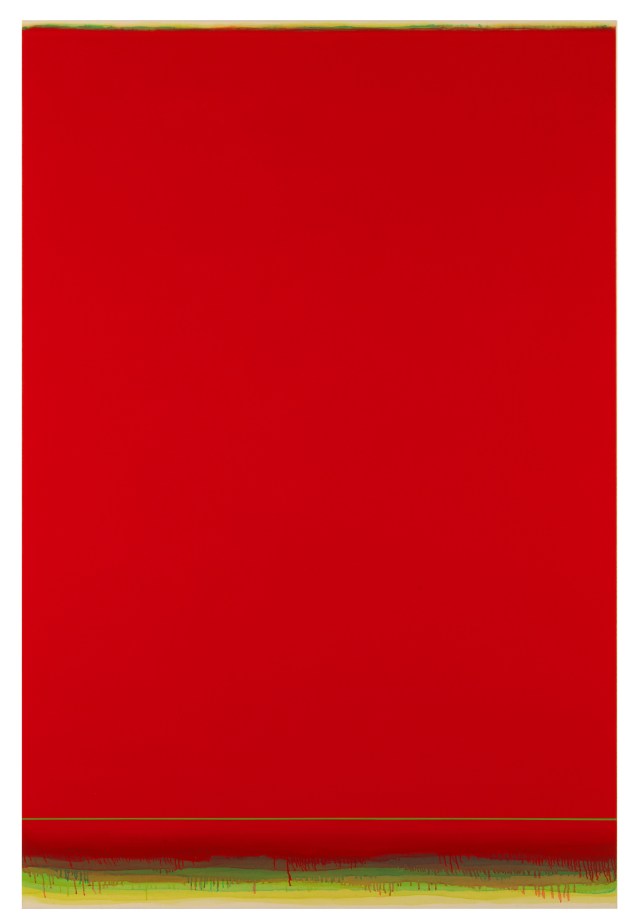
Shingo Francis grew up between California and Japan, two locations that inform his work and practice. Through the process of compositional reduction and color as space Francis created a series of paintings titled “Blue’s Silence” with simple two tones in blue. These paintings subsequently evolved into a new series of paintings titles “Infinite Space” with an overall monochrome color as space with a simple composition with one line towards the bottom signifying an attention to presence. The central color is autonomous due to the refined composition dissipating both at the top and bottom of the canvas revealing a subtle motion of transparent layers. Both series of paintings produce a sense of silence and space with experiences of shifts in tone and complimentary juxtaposition of color.
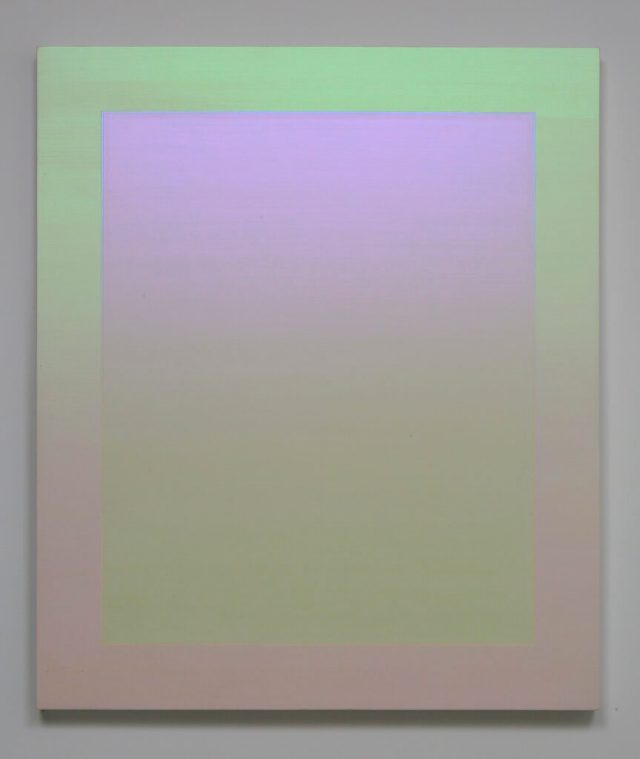
A recent series of paintings titled “interference” utilize a material with small particles cut in an angle to reflect a specific spectrum of color. There is no pigment such as cobalt or cadmium but only color from the color spectrum of light similar to how a rainbow reveals color through the refraction of light in rain droplets. Yet there is an opposing color as well to each refracted color, therefore the painting will shift between two complimentary colors. For example, if the light reflects the color green, it will also be the color magenta when the light is not reflecting back but looked in ambient light. Besides the interesting mechanics of these paintings, the square composition is symmetrical and produces a space to project and hold ones attention or presence. The ever-changing phenomena of these paintings reflect the cyclical nature of time and how our bodies move through space.
Shingo Francis also works on large scale drawing installations, he paints on a large roll of watercolor paper which is suspended from the ceiling in a semicircle allowing the viewer to be subsumed by the curvature of the paper and image.
Francis received a Bachelor of Arts degree from Pitzer College in Claremont and a Master of Arts degree from Art Center College of Design, in Pasadena, California.
Francis’s work has been exhibited in Japan, United States, Germany, South Korea, and Switzerland. He has been included in museums shows at the Kawamura Memorial DIC Museum of Art, Sezon Museum of Modern Art, Ichihara Lakeside Museum and the Martin Museum of Art. He received the Fumio Nanjo Award in Tokyo, and is represented by MISA SHIN GALLERY and William Turner Gallery.
The book mentioned in our interview is Interaction of Color by Josef Albers.
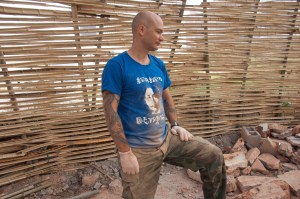
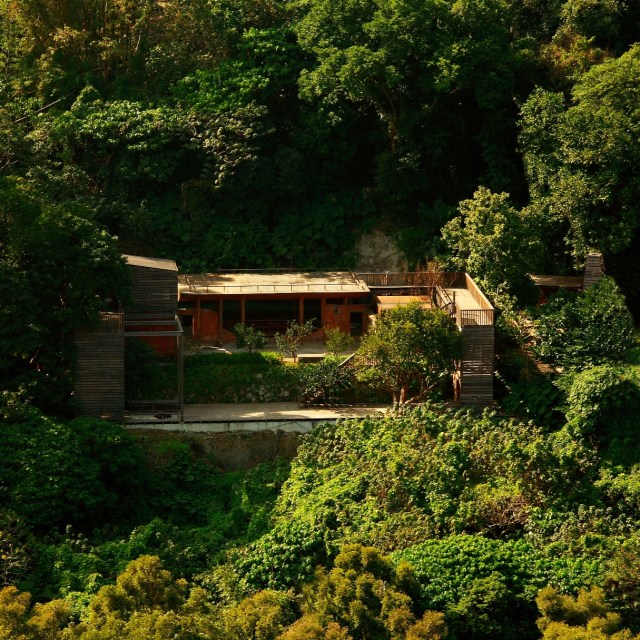
Marco Casagrande (born 1971) graduated from the Helsinki University of Technology Department of Architecture in 2001. From the early stages of his career Casagrande started to mix architecture with other disciplines of art and science landing with a series of ecologically conscious architectural installations around the world. All in all, more than 86 realized works in 16 countries.
He is the laureate of the European Prize for Architecture 2013, Committee of International Architecture Critics CICA Award 2013 for conceptual and artistic architecture and UNESCO & Locus Foundation’s Global Award for Sustainable Architecture 2015.
Casagrande’s works and teaching are moving freely in-between architecture, landscape architecture, urban and environmental design and science, environmental art and circus adding up into cross-over architectural thinking of «commedia dell’architettura», a broad vision of built human environment tied into social drama and environmental awareness. «There is no other reality than nature». He views architects as design shamans merely interpreting what the bigger nature of the shared mind is transmitting.
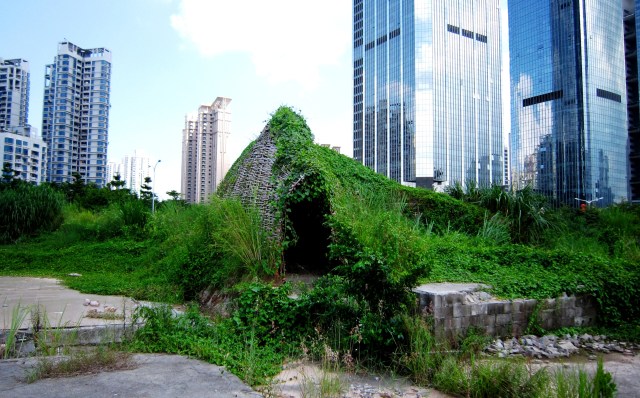
He views cities as complex energy organisms in which different overlapping layers of energy flows are determining the actions of the citizens as well as the development of the city. By mixing environmentalism and urban design Casagrande is developing methods of punctual manipulation of the urban energy flows in order to create an ecologically sustainable urban development towards the so-called Third Generation City. The theory views the future urban development as the ruin of the industrial city, an organic machine ruined by nature including human nature.
Urban Acupuncture: a cross-over architectural manipulation of the collective sensuous intellect of a city. The City is viewed as a multi-dimensional sensitive energy-organism, a living environment. Urban acupuncture aims into a touch with this nature. UA: Sensitivity to understand the energy flows of the collective chi beneath the visual city and reacting on the hot spots of this chi. Architecture as environmental art is in the position to produce the acupuncture needles for the urban chi. A weed will root into the smallest crack in the asphalt and eventually break the city. Urban acupuncture is the weed, and the acupuncture point is the crack. The possibility of the impact is total, connecting human nature as part of nature. The theory opens the door for uncontrolled creativity and freedom. Ruin is something man-made having become part of nature.
Casagrande has been teaching in 65 academic institutions in 25 countries since the year 2000 including the Aalto University, Helsinki University of Art and Design, Tokyo University Tadao Ando Laboratory and China Central Academy of Fine Arts. He was a visiting professor at the Bergen School of Architecture 2001–2004 and Taiwanese Tamkang University Department of Architecture 2004-2009, Principal of the independent cross-disciplinary research centre Ruin Academy in Taipei and Taitung, Taiwan (2010 -) and Artena, Italy (2013 -) in cooperation with the Aalto University’s SGT Sustainable Global Technologies Centre. Casagrande is the Vice-President of the International Society of Biourbanism (2014 -). Currently he holds the professorship of architecture at the Bergen School of Architecture, Norway.
Marco Casagrande is the Principal of the Casagrande Laboratory (2003-), a Finland based internationally operating multi-disciplinary architecture and innovation office.